

4/14
Wonderwall, Welch, Aphex Twin, Ruination Day

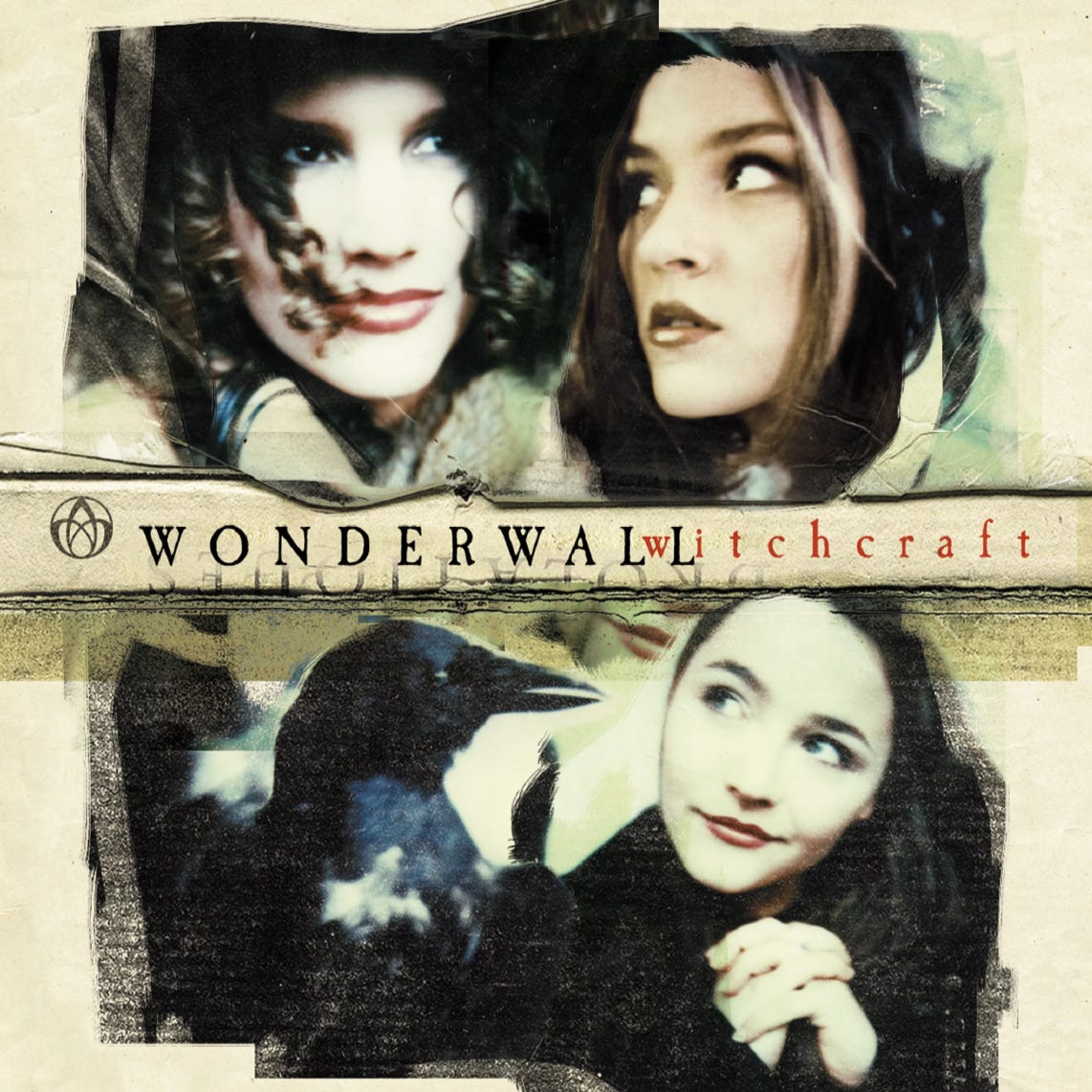
Sometime between late 2000 and early 2002, the German pop trio Wonderwall entered a recording studio to record the songs that would make up their debut album, Witchcraft.
The musical style of Wonderwall was characterized by Billboard as “melodic pop infused with elements of folk, country, and rock,” and was recognized by an association of German record companies with the 2003 Echo Music Prize for Newcomer of the Year.
“Jonny,” one of the album’s dozen tracks, opens with the line “On the night of April the 14th, a little girl walked to New York, New York.”
The song tells a vague story in near nursery-rhyme fashion of a girl who, eight years prior, walked all the way from Seattle to New York and alleging that the song’s eponymous character, her best friend, knows the reason for her journey.
It is likely “Jonny” was recorded in 2001 since the album’s title track and first single, “Witchcraft,” debuted in May 2002, though the album itself would not be released until the following year.
Why was the April 14 date mentioned in the song?
Twenty years before the album’s release, a group of activists known as World Peace Walkers, walked from Seattle to New York, like the girl in the song, then through a large portion of Europe en route to Moscow in an effort to raise awareness of the danger of nuclear arms.
They embarked on this journey in April of 1982, though the exact date is unclear, and it is unknown if this sociopolitical demonstration in any way inspired the lyric to Wonderwall’s song.
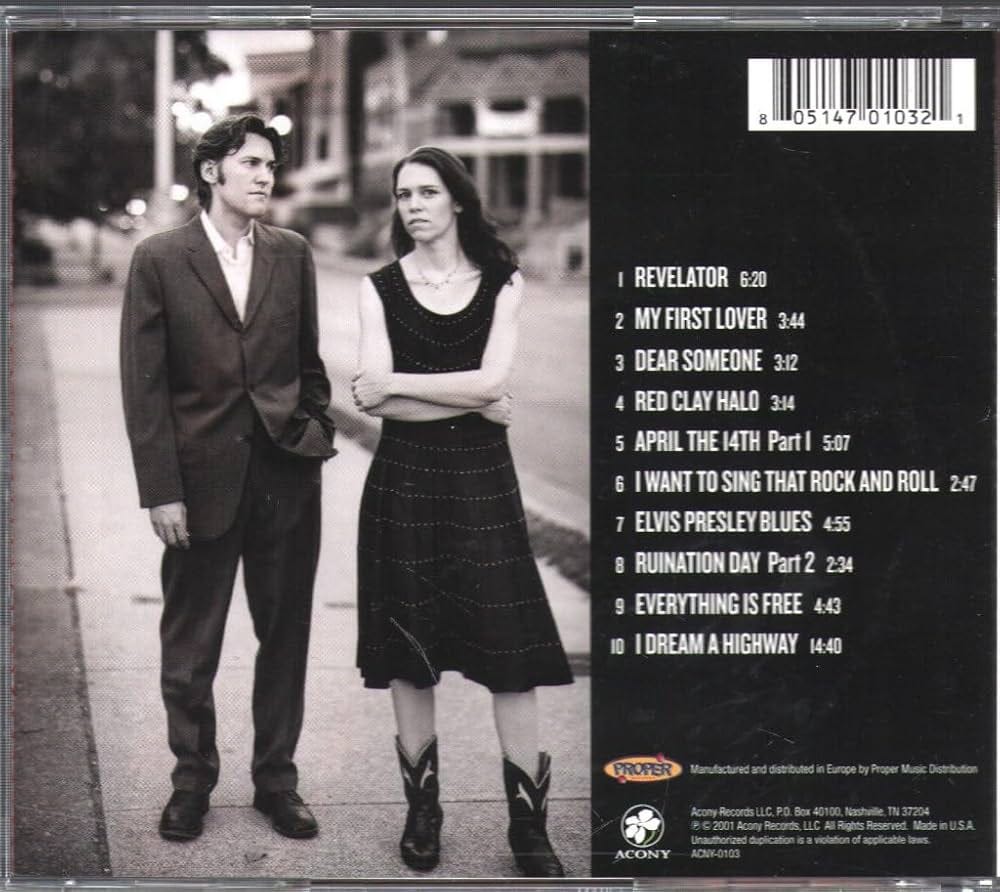
On July 31, 2001, American singer-songwriter Gillian Welch released her third album, Time (The Revelator), produced by her musical partner and co-writer David Rawlings.
The album was largely well-received by critics. The Chicago Sun-Times declared the album “a masterful collection of original songs that evoke the old-time country sound of a bygone era” and that it “salutes the ghosts of the past with richly etched songs rooted in the present.” Rolling Stone ranked it number 64 in their list of the 100 Best Albums of the 2000s, calling it “gorgeous, dreamy, and a little bit weird.”
Two tracks on the album, “April the 14th Part 1” and “Ruination Day Part 2,” started out as one song during the writing process, but then in Welch’s words “blew apart” as one became more modern in feeling and setting while the other retained a more traditional approach. Two separate songs, but “it’s all the same story,” she said.
In the album’s sequence, these two tracks are separated by two other songs about the hypnotizing myth-making force of rock ‘n’ roll: the gospel-like “I Want To Sing That Rock and Roll” and “Elvis Presley Blues,” where Welch sings of Elvis’s hip shaking, comparing it to a hurricane, a chorus girl, a Harlem queen, a holy roller, and John Henry’s hammer.
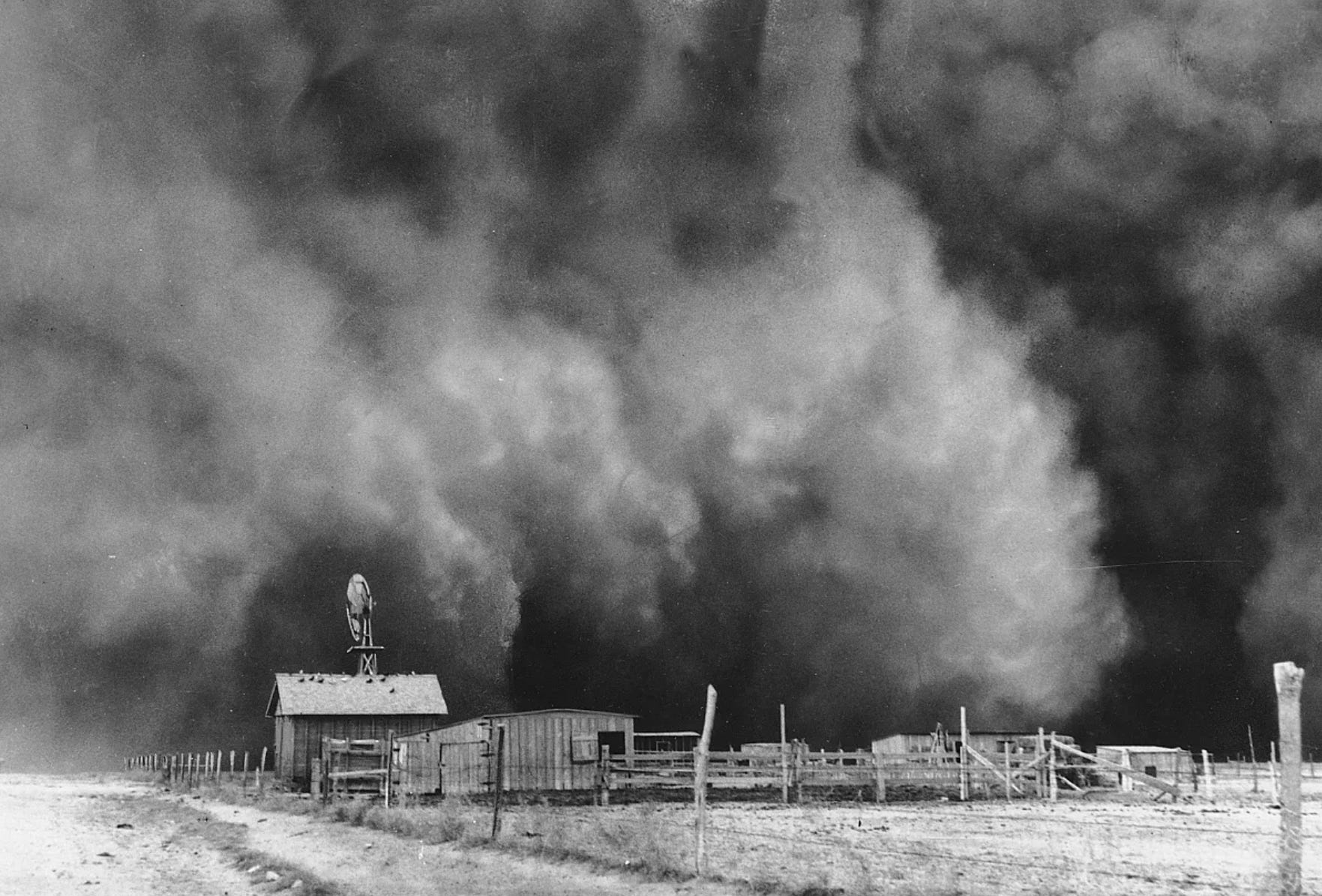
Music begets music. Songs beget songs – particularly in Welch and Rawlings’ world. Welch herself was familiar with Woody Guthrie’s “Dust Storm Disaster” (aka “The Great Dust Storm”) and its opening line, “On the fourteenth day of April of nineteen thirty-five, there struck the worst of dust storms that ever filled the sky.” That song appeared on Guthrie’s 1940 album Dust Bowl Ballads, a collection of songs about the Dust Bowl thought to be one of the first concept albums.
She then learned Blind Willie Johnson’s 1929 song “God Moves on the Water” with its opening line, “Ah, Lord, Ah, Lord, year of nineteen hundred and twelve, April the fourteenth day, Great Titanic struck an iceberg, people had to run and pray.”
Then one day, while watching a documentary about Abraham Lincoln on PBS, Welch heard the narrator say he was shot “on April the 14th.” In her words, she “completely freaked out” then yelled for Rawlings and decided to write a song about it all.
Welch references the Johnson song, putting in her lyrics the phrase “God moves on the water,” which itself may be a citation of the Book of Genesis 1:2 “And the Spirit of God moved upon the face of the waters.”
She also refers to the legendary railroader Casey Jones in both parts, comparing the Titanic’s collision with the iceberg to the famous crash of the “Old 382” where on the night of April 29, 1900, Jones’ passenger train traveling seventy-five miles per hour crashed into a stalled freight train. It is estimated Jones was able to slow it down to approximately forty miles per hour upon collision once he realized the situation, thus saving passengers’ lives. He was the only fatality.
“When the iceberg hit, oh they must have known, God moves on the water like Casey Jones.”
Elsewhere in “April the 14th Part 1,” she uses the same phrasing as Guthrie: “it was the fourteenth day of April.” It is possible Guthrie may have heard the Johnson song about the Titanic and was compelled to structure the opening lines to his Dust Bowl song similarly.
It is also interesting to note when Guthrie recorded “Tom Joad” for the same album, the approximately seven-minute song was too long to fit on a single side of a 78 rpm record. Therefore, for practical rather than artistic reasons, his song was also divided into two parts: “Tom Joad Part 1” and “Tom Joad Part 2.”
In “Ruination Day Part 2,” Welch recounts the historical events of April 14 and connects them all as having been “five hundred miles from home.” Titanic passengers out to sea, Okies fleeing the Dust Bowl, Lincoln away from Chicago. Then, in her words again, she “spat out a phrase,” giving the day a nickname, which became the song’s title.
“It was not December, and it was not in May, it was the fourteenth of April that is ruination day.”
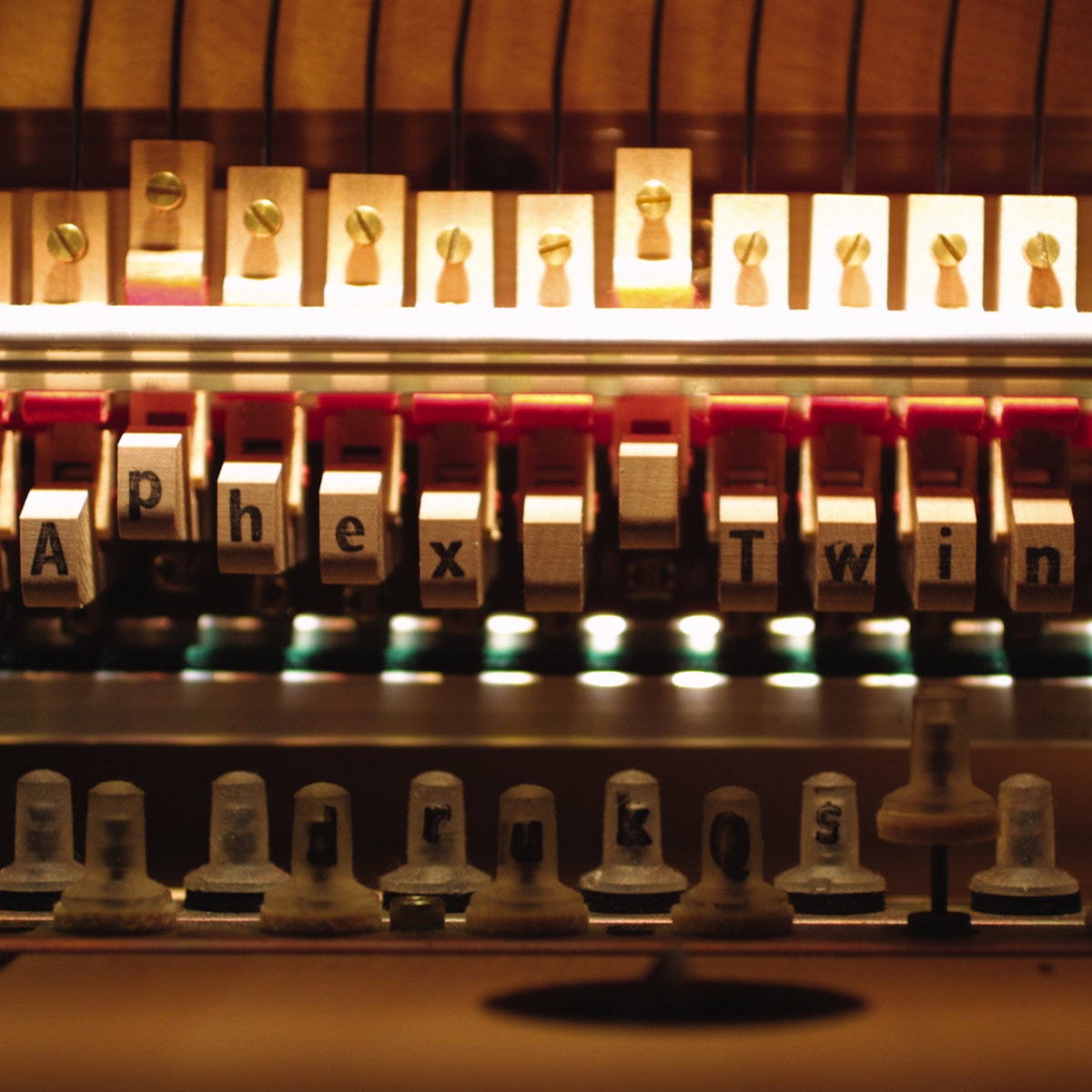
On October 11, 2001, Aphex Twin, the nom de guerre of British electronic musician Richard D. James, released the album Drukqs.
The album was met with mixed reviews. Rolling Stone called it James’ “most irrelevant album to date,” while New Musical Express (NME) said it was “beautifully paced” and “never boring.” The A.V. Club noted “most of the album’s beautiful moments are cordoned off from the unbeautiful ones in ways that leave both wanting” as Billboard similarly said it “sounds like two different albums competing and canceling each other out.”
One of the “beautiful” moments on the album is a piano composition entitled “Avril 14th” – French for “April 14th.”
The song is a two-minute two-part piano piece that feels like it falls somewhere between Johann S. Bach’s “March in D Major” and Erik Satie’s “Gymnopédies.” A romantic, melancholic, delicate, heartfelt lullaby where you can hear what sounds like the mechanics of piano keys clicking in between the notes like a typewriter.
It is suspected the track was created using a Disklavier, an acoustic piano made by Yamaha that has the ability to read MIDI data and self-play a composition, player-piano style. That said, despite its autoplay capabilities, there seems to be some debate on whether or not James played the instrument by hand, thus blurring the creative roles of “man” and “machine” in creating the track.
Nonetheless, the song took on a life of its own.
It has been covered by Alarm Will Sound, The Wee Trio, Jon Stickley, Mucof and Vanessa Wagner, and Martin Jacoby, among many others.
Director Sofia Coppola used it in her 2006 film Marie Antoinette. The track appears in Chris Morris’ Four Lions in 2010, an episode of “Secret Diary of a Call Girl” in 2011, and in the 2013 film Her directed by Coppola’s ex-husband Spike Jonze.
Lonely Island, the comedy trio known for their digital shorts on “Saturday Night Live,” used a looped sample from “Avril 14th” for “Iran So Far,” a song and short featuring Andy Samberg and Adam Levine, which appeared on the show in 2007.
The musical guest for that particular “SNL” episode was Kanye West, who also sampled “Avril 14th” for his track “Blame Game,” featuring John Legend and “SNL” alum Chris Rock, on his 2010 album My Beautiful Dark Twisted Fantasy.
James himself, as Aphex Twin, released new versions of the song in 2019.
As of April 14, 2023, the track has been streamed over 153 million times on Spotify.
But why did James choose that particular date for the title of his piece of music? Is it simply when he composed or recorded the song? Does he have a personal connection to that particular day? Could it be the birthday of someone close to him, or an anniversary? The date of a distinctive event that happened in his life?
Or was it a completely arbitrary choice? A whim?
James has said very little about the composition, or Drukqs for that matter. He promoted it with scarce live performances and appearances, giving few interviews and believing his work should remain somewhat abstract, speaking for itself.
A little over twenty years after the release of Drukqs, James’ mother, Lorna, died on April 13, 2022.
The Ides of April.
Was James also cognizant of the historical significance of that day? For that matter, was Wonderwall? Had they heard Welch’s songs?
Were any of them aware of other events that had occurred on April 14?
An earthquake struck Ljubljana, the capital of modern-day Slovenia, on Easter Sunday, April 14, 1895. It was the most destructive earthquake in the area.
Hauser Dam, a steel dam on the Missouri River in Montana, failed, sending a surge of water up to thirty feet high downstream on April 14, 1908.
Muslims in present-day Turkey began massacring Armenians in Adana on April 14, 1909.
Adolph Hitler was featured on the cover of TIME Magazine on April 14, 1941.
A massive explosion in the Victorian Dock of Bombay, British India killed three hundred on April 14, 1944.
Sputnik 2, the first spacecraft to carry a living animal, fell from orbit on April 14, 1958, killing a female dog named Laika.
The heaviest hailstones ever recorded, each weighing 2.2 lbs, fell on Bangladesh, killing 92 people on April 14, 1986. Another fierce hailstorm in Sydney was the costliest natural disaster in Australian insurance history on April 14, 1999.
Pai Hsiao-yen, daughter of Taiwanese artiste Pai Bing-bing, was kidnapped on her way to school, on April 14, 1997, preceding her murder.
NATO mistakenly bombs a convoy of ethnic Albanian refugees, killing 75, on April 14, 1999.
Earthquakes, floods, storms, explosions, dictators, abduction, murder, massacres. One might presume that when the world ends, it will happen on April 14. Ruination Day. Coinciding with the astrological season of Aries, which is derived from “Ares,” the Greek god of war, brutality, and slaughter.
But also, courage.
The first ever commercial motion picture house, using Kinetoscopes, opened in New York City on April 14, 1894.
The Bremen, a German aircraft, completed the first successful transatlantic airplane flight from east to west on April 14, 1928.
The first Monaco Grand Prix took place on April 14, 1929.
The Spanish Cortes deposed King Alfonso XIII and proclaimed the Second Spanish Republic on April 14, 1931, while Gnassingbé Eyadéma overthrew Nicolas Grunitzky as the new President of Togo on April 14, 1967.
Columbia, the first operational space shuttle, completed its first test flight on April 14, 1981.
The Human Genome Project was completed with 99% of the human genome sequenced to an accuracy of 99.99% on April 14, 2003.
Weeks into the Russian invasion of Ukraine, the latter’s forces sank the Russian guided missile cruiser Moskva on April 14, 2022.
Tribulations and triumphs abound.
Furthermore, why did Wonderwall, Gillian Welch, and Aphex Twin all happen to connect with this date in 2001?
If someone from the Western Hemisphere were to choose a day in 2001 to dub “Ruination Day,” September 11 would likely spring to mind. Of course, the events of that day were months away from the release of Welch’s songs, not to mention when she wrote and recorded them – and probably the writing and recording of the Aphex Twin and Wonderwall songs as well.
And yet, a German girl group, a British electronic musician, and an American folk singer-songwriter, all unlikely to be aware of one another, chose to reference that month and day in three separate unique songs and release them within a few months of each other, one of which actually addresses three historical, monumental tragic events, all of which occurred on April 14.
Again, Wonderwall did not release Witchcraft until May 2002. In September of that year, they released yet another single from the album, “In April (You Call My Name),” a wispy mid-tempo pop song where the singer longs for a different romantic outcome when “in April it sounds like love.”
It would not be long before the trio capitalized on their momentum and entered the studio again. In 2003, they released their sophomore album.
The title?
What Does It Mean?
I love theories about why April is the scariest month-- isn't there also a string of bad things that happened on April 20th?
Damn, this was great.